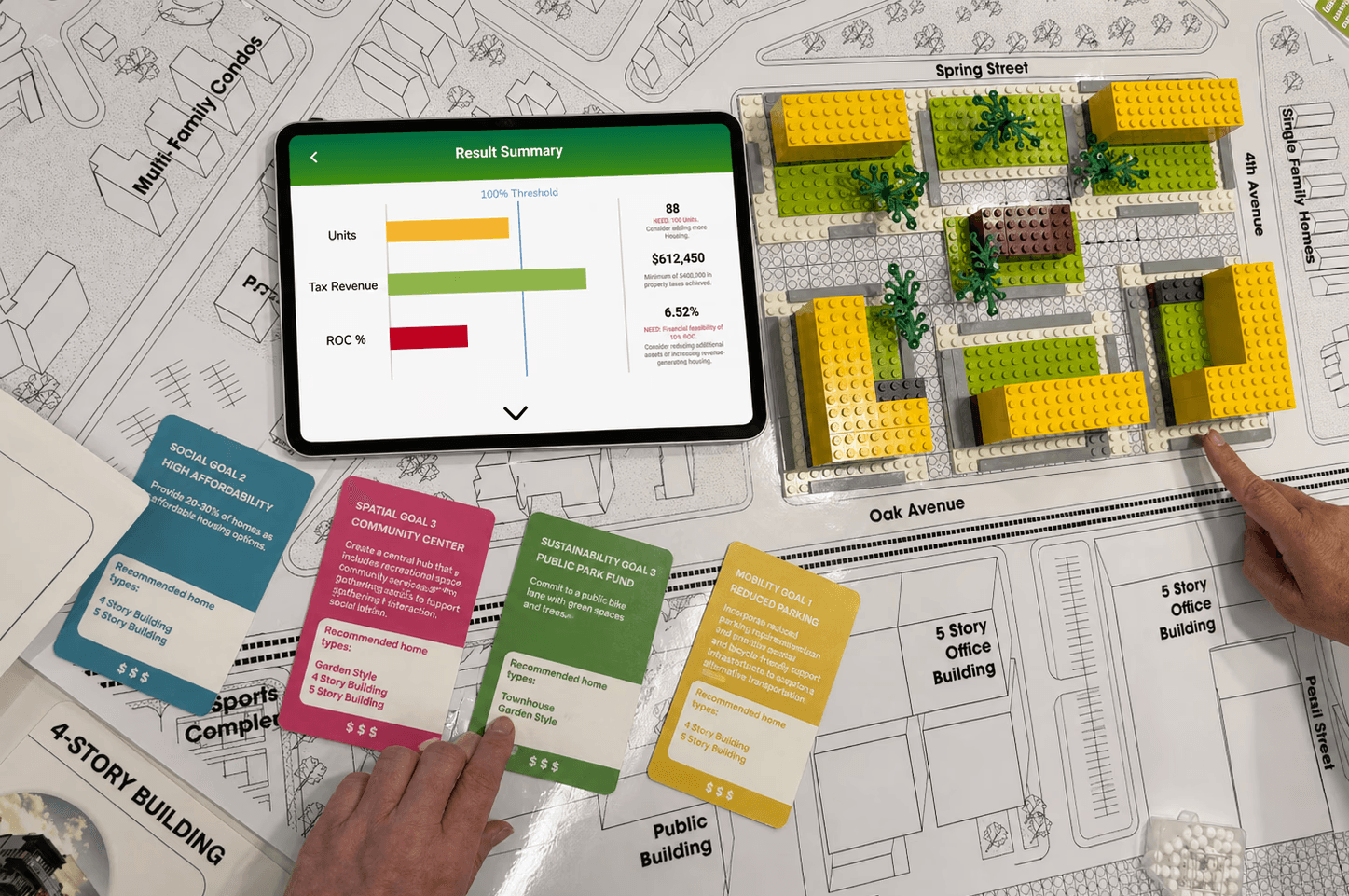
Homeward Scoring Platform
Redesigned Homeward's scoring platform from Excel to a streamlined digital experience, using user research and iterative prototyping to balance player needs with client objectives.
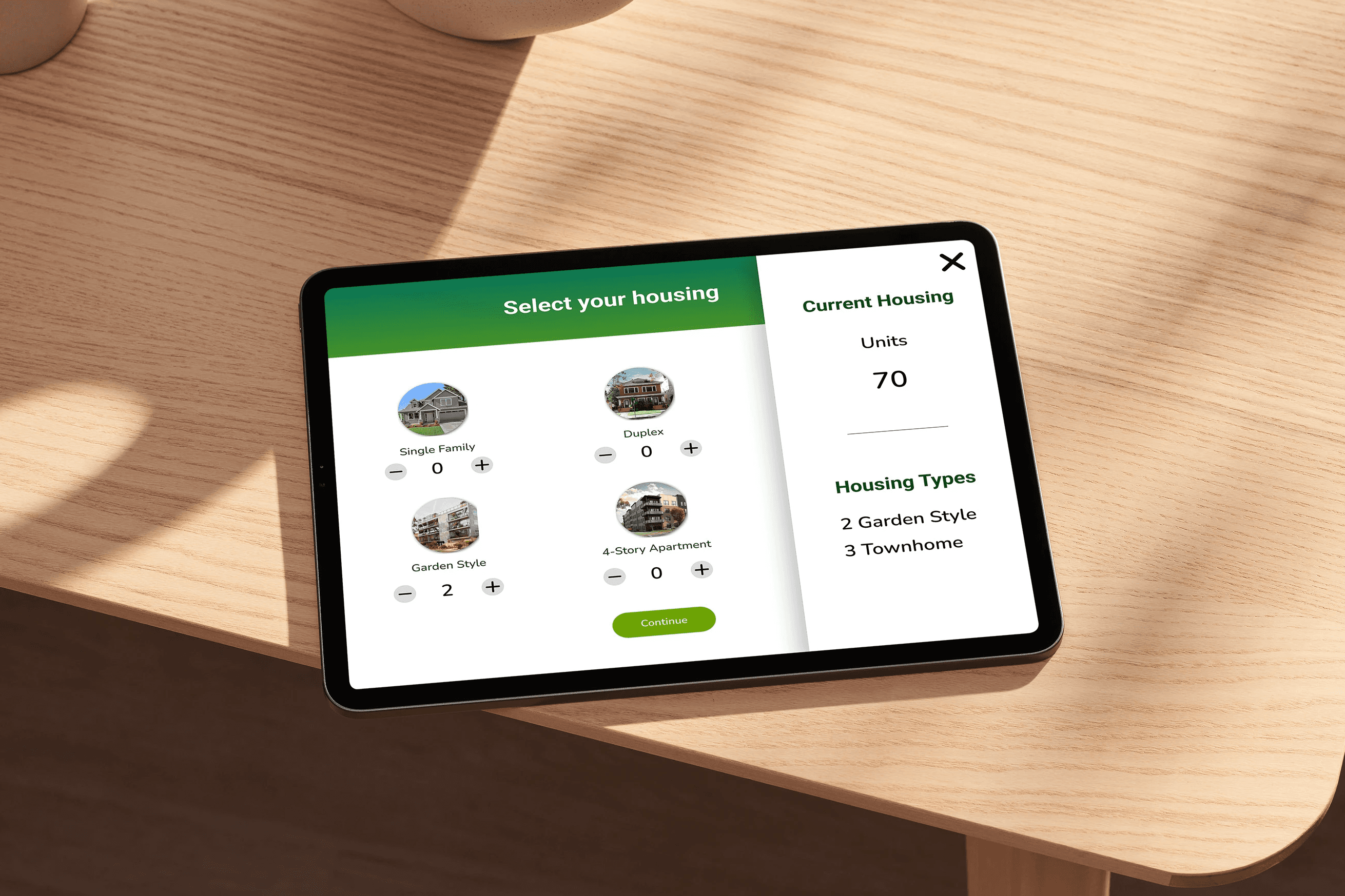
PROJECT DETAILS
Role
UX Designer
Team
Homeward UX Team
Timeline
Spring 2026
Overview
Homeward is an educational board game that teaches urban planning professionals the fundamentals of residential housing development.
I conducted user interviews, designed the visual style guide, and built the high-fidelity prototype. Working alongside three teammates who created user personas and journey maps, we transformed the Excel-based system into an intuitive digital experience.
PROBLEM
The existing scoring system relied on a clunky Excel spreadsheet that slowed gameplay and frustrated users. Players struggled to navigate complex formulas and track progress efficiently.
Before
After
RESEARCH & DISCOVERY
We used a three-phase research strategy to understand the current experience and identify opportunities for improvement.
Phase 1
Before conducting new research, we reviewed feedback forms from previous Homeward players to identify patterns.
Phase 2
To dig deeper into the Excel pain points, we interviewed 2 urban development professionals who represent the type of people Homeward is designed for.
Phase 3
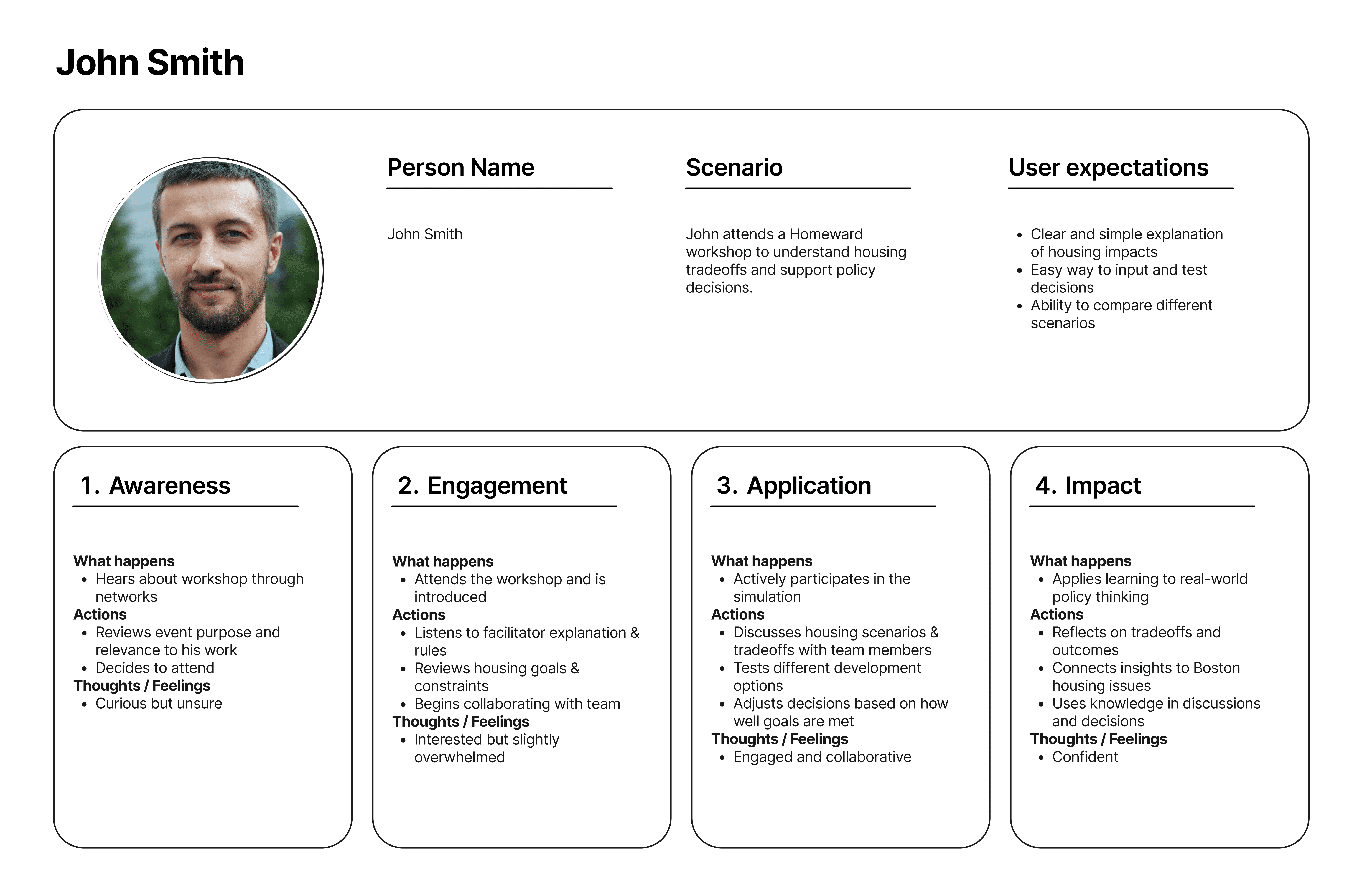
From our feedback analysis and interviews, we developed two user personas representing our primary audiences.

John Smith
Boston City Council Member (District 7)
Bio
John Smith is serving his second term as a District 7 councilman. He ran unopposed after his first term.
Goals
Frustrations

Margaret Callahoun
Brookline Representative Town Meeting Member
Bio
Margaret is a retired public school teacher, volunteers part-time for the non-profit Rosie’s Place.
Goals
Frustrations
DEFINING THE SOLUTION
User Journey
What players struggled with:
• Excel spreadsheet was confusing and hard to navigate
• Difficult to visualize goal progress and tradeoffs
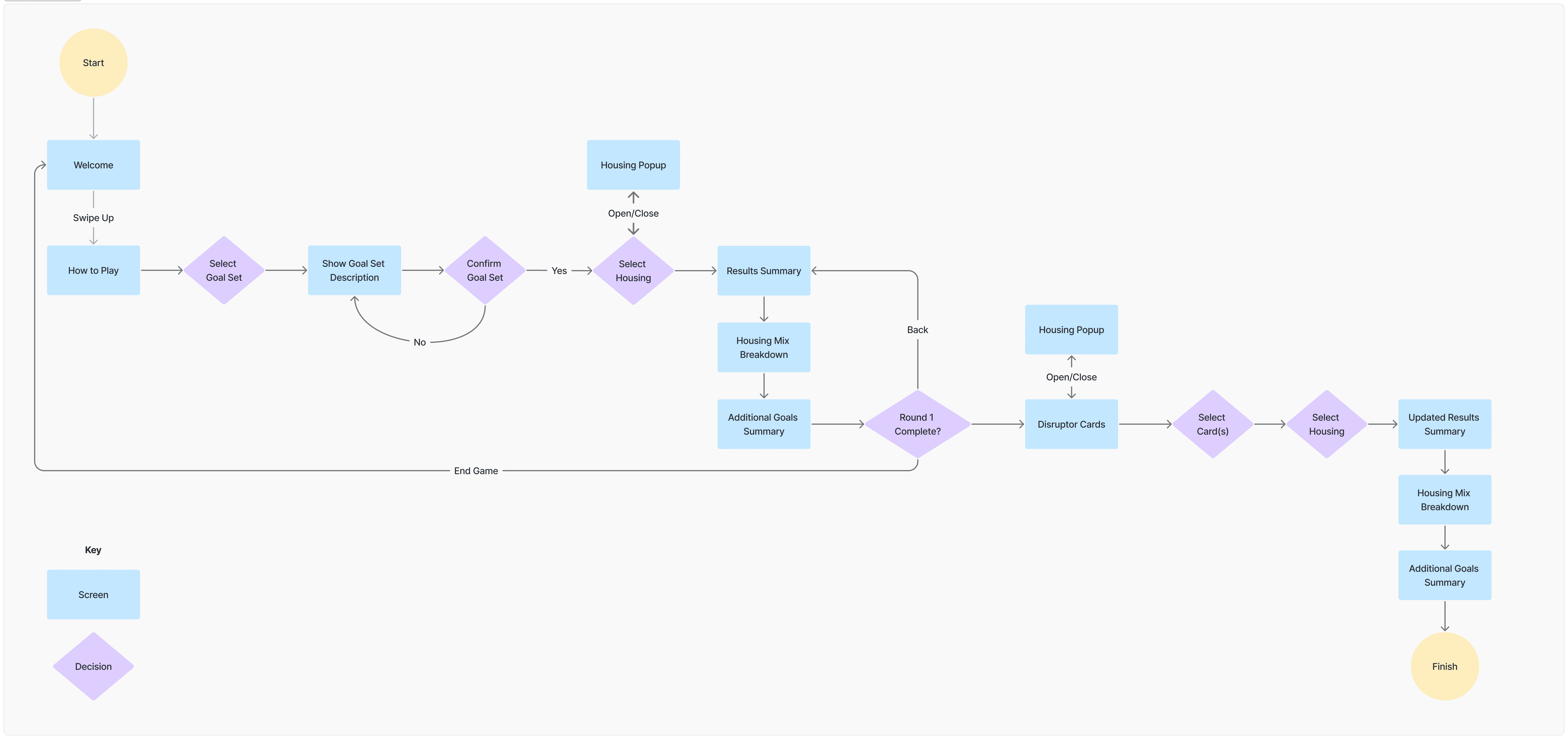
User Flow
This ideal experience informed our information architecture and navigation structure.
SOLUTIONS IN ACTION
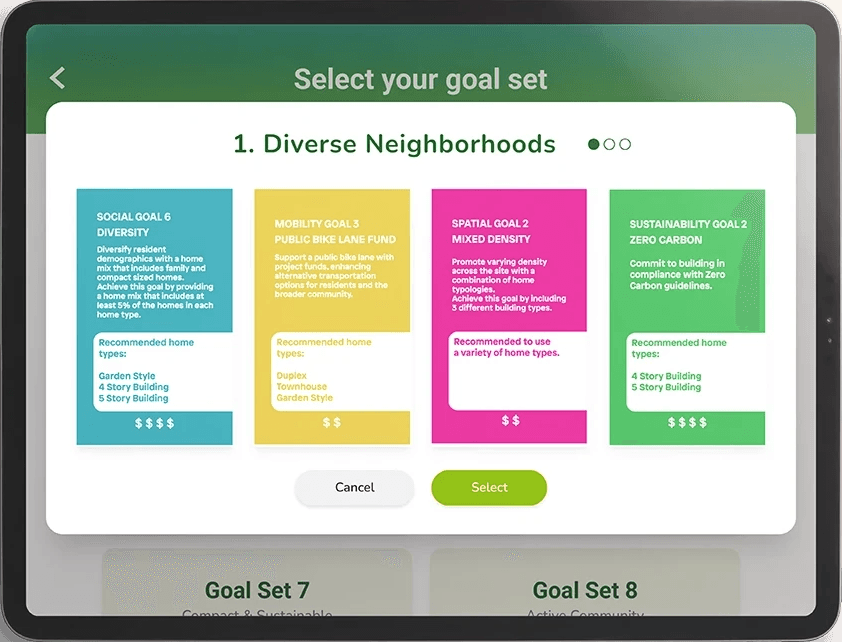
Goal Cards
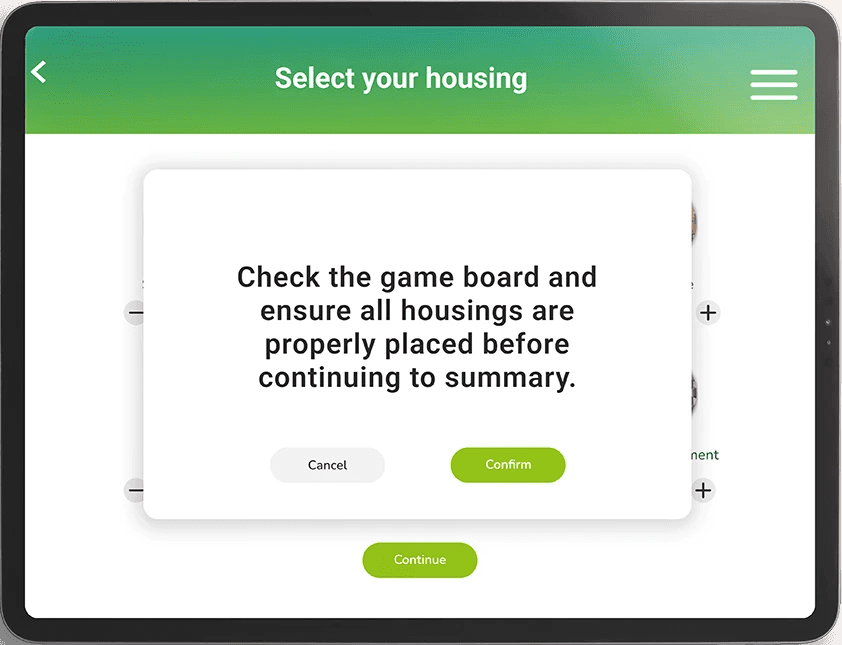
Intentional Pacing Through Prompts
Pop-up prompts throughout the flow remind players to return to the board and discuss decisions with their team.
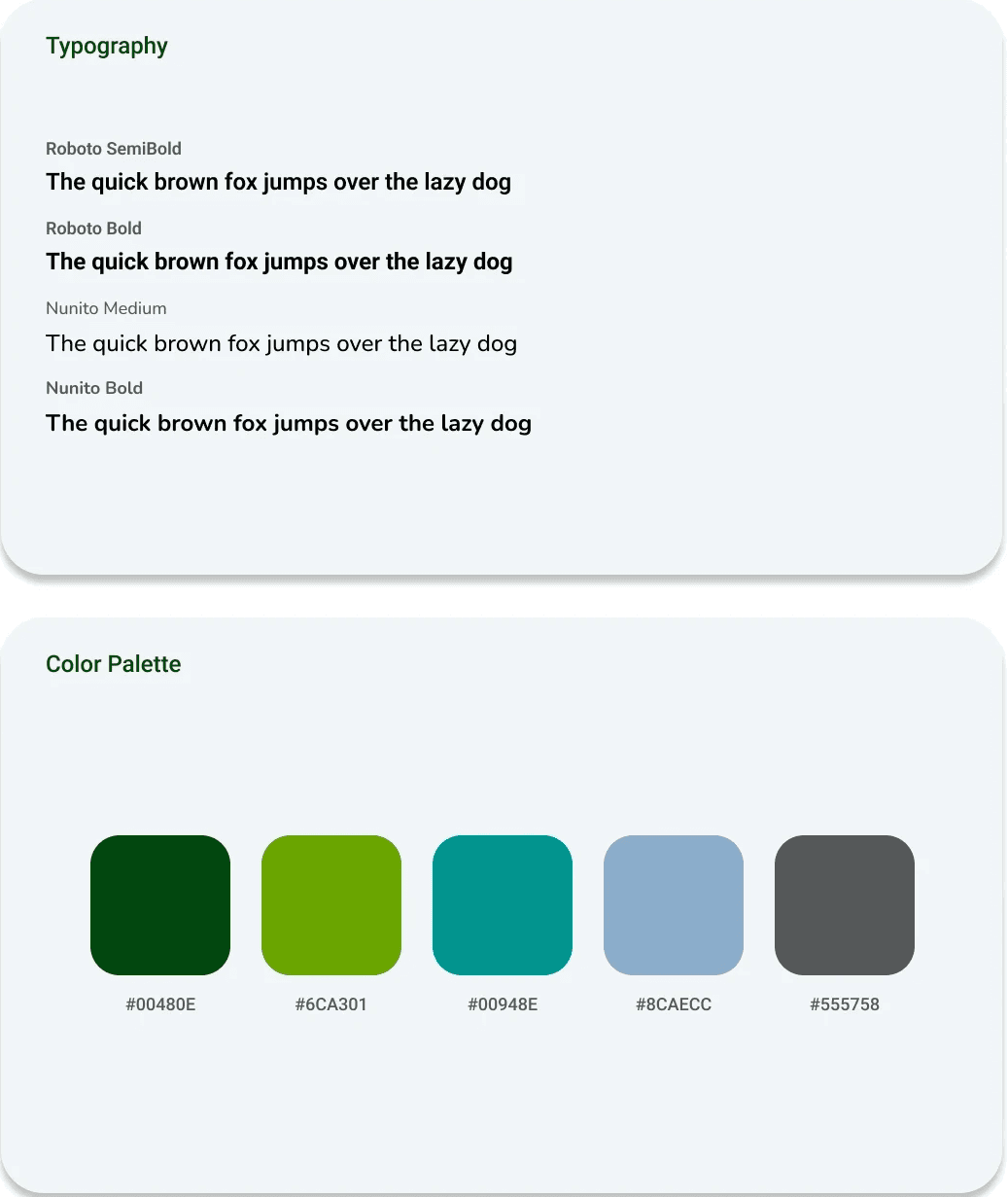
DESIGN DIRECTION
We received ULI's brand kit.
Visual Style Guide
RESULTS
APPLICATION